
Coston Primary is lucky to have Chereece Whyte. She’s remarkably experienced, she’s a problem solver with a passion for data, and she’s open to change when the evidence calls for it.
Now in her 14th year in education, she’s Assistant Headteacher for Curriculum and the school’s Writing Lead – a dual role that keeps her equally close to classroom practice and whole-school strategy.
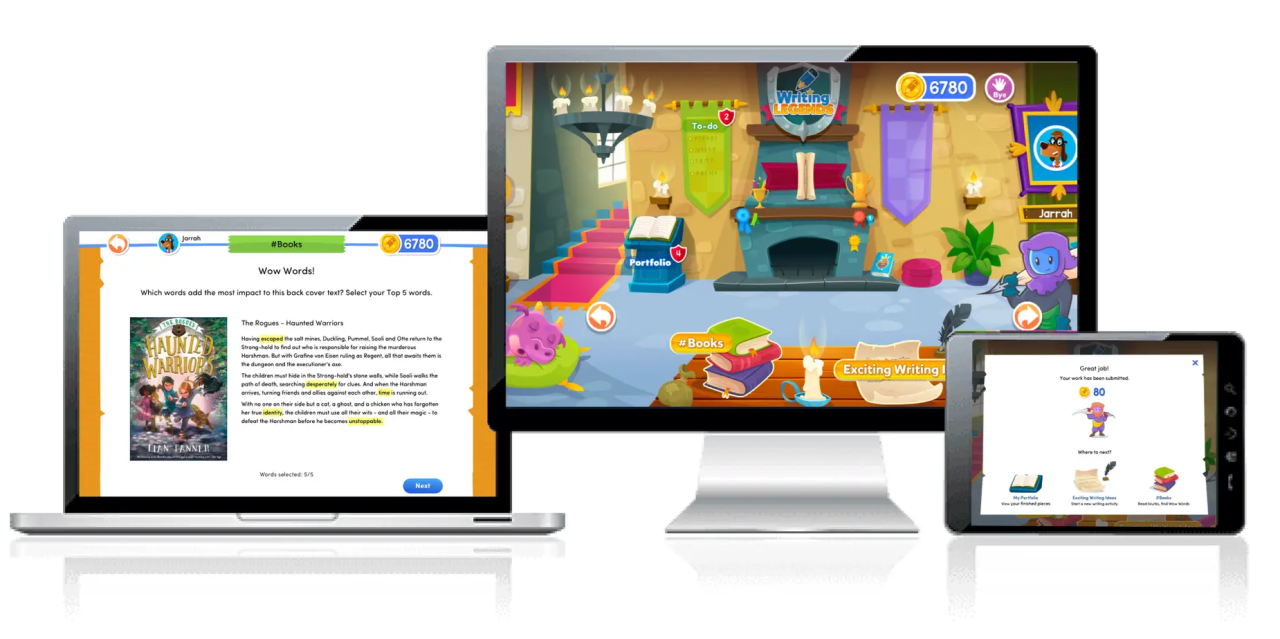
Chereece is also the person responsible for rolling out Writing Legends* at Coston – a two-form entry primary school in London serving, in Chereece’s words, “a very diverse community” – one with a growing proportion of pupils learning English as an additional language.
Writing Legends was already available to the school as part of the wider 3 Essentials package alongside Reading Eggs, Mathseeds and Mathletics, but initially Chereece held off, wary of handing staff yet “another online platform” to learn. That changed when she looked at the school’s writing data… and didn’t like what she saw.
Her judgement is what turned the school’s weakest subject around. We sat down with Chereece to hear the story behind that change.
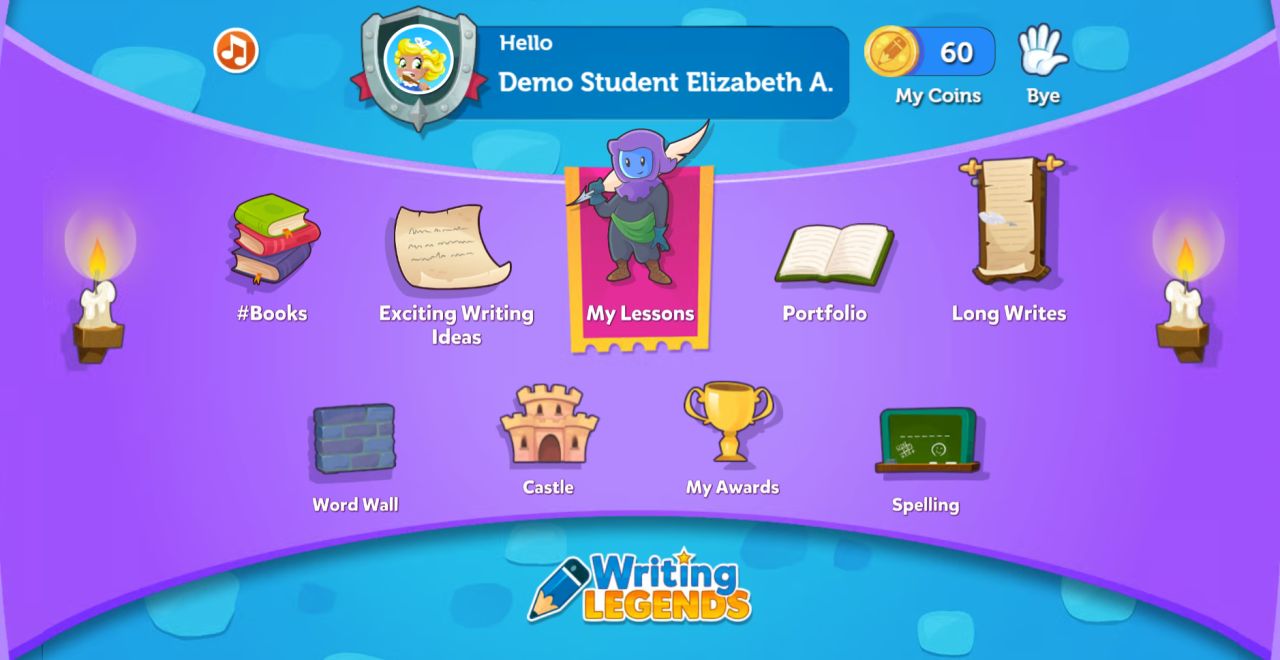
* Writing Legends is an online writing program, designed to make writing instruction easier and help build confident, capable writers. It’s created by the same experienced team behind Reading Eggs, and is currently available in Australia, New Zealand, the UK, Ireland and South Africa.
The challenge: Confronting the writing gap
Writing had long been the weak link in Coston’s core subject data.
Part of our school development plan has been about improving the writing outcomes,” Chereece says. “If we think about our end-of-key-stage data, it’s always the subject that lags behind reading and maths.
That term, the trajectory wasn’t looking good. Too many pupils weren’t on track to make the progress they needed. As Chereece puts it:
Something quite drastic needed to change.
Her response was to restructure how writing was taught – dedicated 10 to 15-minute conferencing slots with small groups of four to six pupils, sometimes fewer, sometimes one-to-one, so teachers could focus tightly on exactly what each child needed.
It was a sound idea and a right direction – with one catch, obvious to anyone who has ever taught in a classroom:
There was the issue of what will the rest of the class be doing whilst this targeted group work takes place.
Without an answer, she knew a conferencing lesson would collapse within minutes – interrupted “nine times out of ten” by pupils asking what to do next.

The solution: Purposeful, independent writing practice for every pupil
Conferencing gave Chereece the reason to bring Writing Legends forward – already available as part of the 3 Essentials package Coston was subscribed to.
It made sense to introduce it at that point as a way to engage the rest of the class with something really purposeful.
Purposeful – that’s the key word. Not busywork to fill the gap, but proper writing instruction, tailored for each pupil – driven by Writing Legends’ placement test and built to close whatever gaps that pupil had, while the teacher worked with their conferencing group.
When she introduced it to staff, she made a point of showing them it wasn’t just another game to keep pupils occupied.
They saw value in the fact that it didn’t just look like an online game that would keep the children busy whilst they were doing the real work.
Running conferencing a day a week meant less curriculum ground covered – enough to risk some year groups falling behind schedule. Chereece judged that a fair trade for getting the fundamentals right, got the leadership team’s backing, and launched straight after Easter for the whole summer term. Once that was ironed out, it settled into exactly the role Chereece wanted it to play.
[Writing Legends] really does allow the children to be independent with the programme and to make improvements on their writing without needing a teacher to guide them. It does all of the hard work.
That’s also what won teachers over: they could “hone in on individual children or groups of children that need to work on the same skills,” while the rest of the class got on with something “really purposeful that is also based on their individual gaps in knowledge and the skills that they need to work on, because it does the placement test.”
Part of what made the decision an easy one to back, Chereece says, was trust already earned. Coston had used Reading Eggs and Mathletics for years by that point, and a recent switch to Reading Eggspress (part of the Reading Eggs suite designed to develop strong spelling and comprehension skills) – backed by 3P Learning staff training and a launch assembly – had already shown her what a confident rollout looked like.
We can trust [3P Learning] because we already have their products, and we can see the value and the progress that the children who use it regularly make.
The impact: Accelerated progress across the board
By the time she reviewed the summer term data, Chereece had gone through it “with a fine-tooth comb”, tracking which pupils teachers were targeting through conferencing each week. What she found was “quite phenomenal”:
accelerated progress across the board, with several pupils who had been off track at the start of term now meeting age-related expectations.
That result alone was enough to make the change permanent. Conferencing and Writing Legends will continue through the whole of the autumn term. Longer term, she’s planning to redesign school’s curriculum so that writing conferencing and Writing Legends become, as she puts it, “part and parcel of our English offer” – a fixed part of how writing is taught at Coston Primary.
Additionally, just before term ended, Chereece ran two surveys – one for staff, on how the new conferencing structure had shaped pupils’ confidence in writing and their ability to talk about their own next steps; one covering the platform itself, and how well it was meeting individual pupils’ needs.
The response was “overwhelmingly positive”.
Even though she’d brought Writing Legends in to solve a practical problem, not to chase engagement – the sheer enjoyment pupils took to it was a welcome bonus on top of the improved results.

Beyond the writing gains: The school-wide value of 3 Essentials
Beyond the writing gains, the 3 Essentials package was quietly doing its own work elsewhere at Coston.
For a school with a high proportion of EAL pupils, Chereece says Reading Eggs and Fast Phonics [an online synthetic phonics program included in the Reading Eggs suite] have been genuinely effective at building language skills:
[Reading Eggs and Fast Phonics] really do help to accelerate the language and the learning skills of those children in what is a very fun and interactive and engaging way. I don’t even think they realise half of the time just how much language they’re learning through the platform.
Reading Eggs had an impact in the school’s specialist resource provision too, where several non-verbal pupils have made significant progress this year – progress the school makes a point of celebrating alongside the rest of the school’s weekly certificates.
This experience reflects the research: students who regularly use Reading Eggs achieve higher scores than non-users, reaching 138% of expected literacy growth in early primary and 130% of expected annual growth in upper primary, with +208 Lexile points in both groups – with just 20 minutes of practice a week.
3 Essentials has also replaced Coston’s old paper homework system entirely: the printing, the marking, and the awkward reality that the pupils who most needed the practice were often the ones least likely to bring it back completed.

The verdict: Proven progress across the school
Writing Legends did exactly what Chereece needed it to do. It solved the specific problem she set out to fix and by the end of the term, the writing data proved the gamble had paid off. What started as a fix for one gap in the school day is now being built permanently into how Coston teaches writing.
Its value hasn’t stopped at writing, though.
We are really satisfied with [3 Essentials], to be honest with you.
The fact that it covers early phonics, developing reading, children that are… further along in their reading journey, the maths and now the writing – it’s a complete programme, a one-stop shop to support and consolidate all of those things that we teach in the classrooms.
That view isn’t purely professional, either. Chereece can also vouch for 3P Learning programmes as a parent, with two of her own children using them – including her five-year-old, whose growing love of reading she says is “a direct result of how fun she finds the platform.”
It’s designed in such a way that it feels fun and exciting for the children, but it actually does have real benefit to the amount of progress that they can make if it is used consistently.
For a school that started the year with writing trailing behind its other core subjects, the result was exactly what Chereece had hoped for.
Try Writing Legends with your class, free
At Coston Primary, one term of Writing Legends alongside small-group conferencing helped close a longstanding gap in writing outcomes. Whether as part of the integrated 3 Essentials package for reading, writing and maths, or as a standalone writing programme, Writing Legends can help your school or trust do the same.
Explore Writing Legends or start your free trial today.

